
Manchesterism – and beyond
If Andy Burnham is to realise his vision of "public, place and pluralism" he will need to confront urgent strategic choices on the US and EU, technology and the future of work.

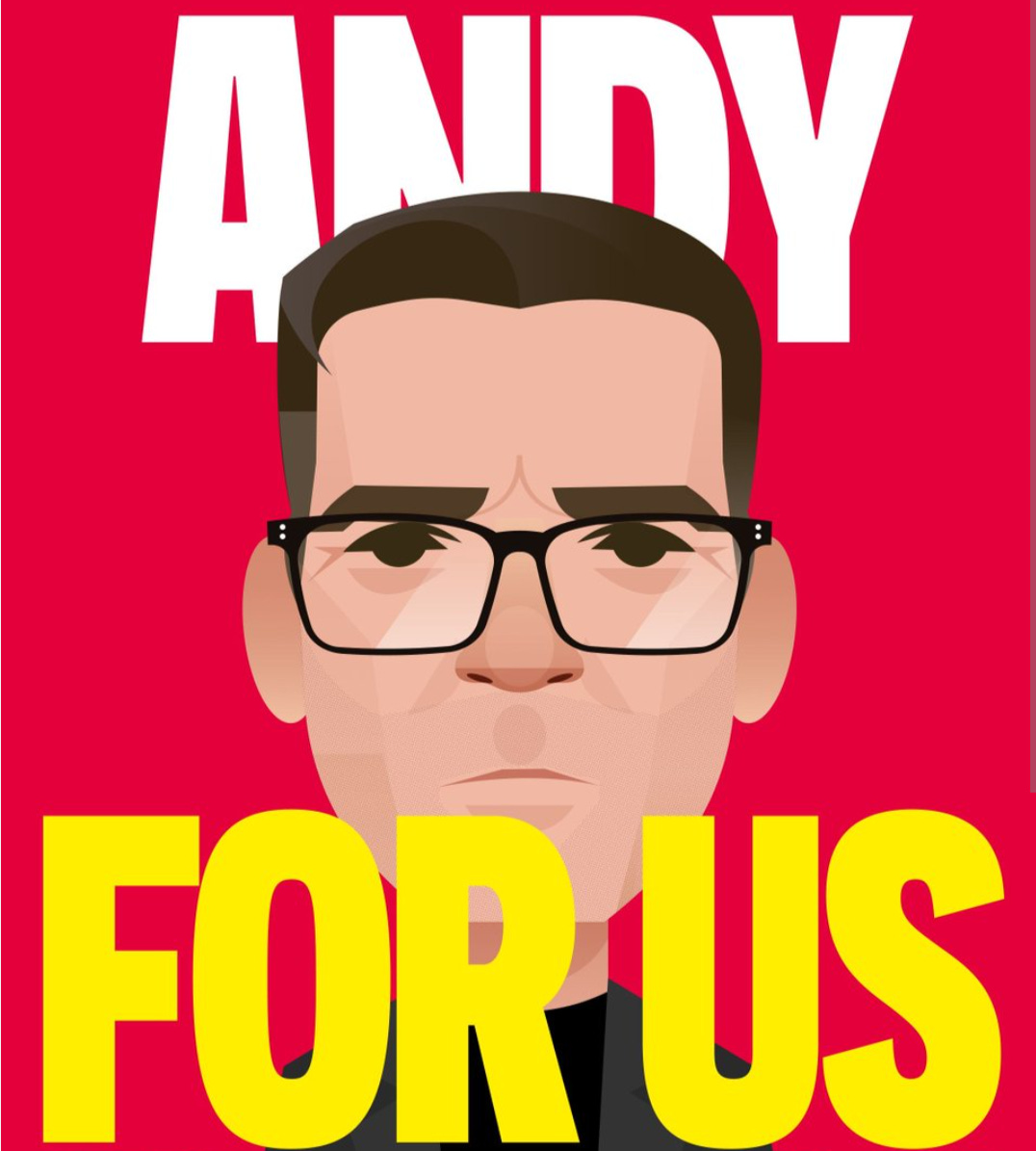
The core values of Manchesterism have become increasingly clear over the past few weeks. Andy Burnham’s strategy for the UK will be driven by public control, pluralism and place. This has a very different, even revolutionary feel to it, comparable to the advent of New Labour in the 1990s. In a well-received speech, he effectively launched his leadership, and this line, in particular, feels like a foundational statement:
“I am going to give Britain the circuit-breaker it needs, by building a more collaborative politics in Westminster, by taking power out of the centre and putting it in the hands of the people and places who can use it best and, in so doing, creating a new sense of agency, possibility and hope flowing around the country.”
Public control, pluralism and place weave through the thinking. Alongside this, in the constrained political world of Labour since the election, a range of impressive thinkers, including MPs, academics and think tankers, have been doing some intellectual and technocratic heavy-lifting on the policy ideas and strategies that can power the next phase of Labour Government.
Mathew Lawrence and Alex Williams’ The Productive State is the most developed thinking on the “public control” part of the Burnham agenda. The key contention here is that the market functions better, and people experience greater security, with a state that more actively participates in and shapes critical markets such as housing, utilities, transport, and care. In normal countries, none of this is the slightest bit contentious. The UK is not a normal country. So we have more than 25% of Thames Water customers’ bills going to pay its debt. Much of the privatisation agenda of the 1980s and onwards casts a long shadow.
A group of Labour MPs, the Tribune Group, published a series of essays in a special issue of Renewal Journal. The theme is again how the British state can become more productive and intervene to reduce cost-of-living pressures on people and small businesses. A key argument is that the state needs to find ways of accumulating capital for long-term investment beyond the current fiscal rules with their constraining effects. Public corporations of different types, from regional development funds to the National Housing Bank to the National Wealth Fund, are at the heart of this long-term mission. Again, normal countries like France, Germany and the Netherlands do this as a matter of course. We seem determined to make it difficult on ourselves.
Mark McVitie and Chris Curtis MP of the Labour Growth Group are more market-oriented in their prospectus, An Honest Day. They argue it is the state that is the problem, creating bottlenecks that generate economic rents, weigh on the cost of living, redistribute economic security away from workers and create pressures on the public purse. The solution is the “capable” state that intervenes heavily where necessary but gets out of the way where it’s not. If Abundance by Ezra Klein and Derek Thompson had a policy agenda, it would look like this. And indeed, Lawrence and Williams use the “abundance” frame as well.
Whether “abundance” can become anything more than a jarring slogan in the context of climate emergency, vastly increasing demands on energy and power (not least for compute infrastructure), and raging geopolitical conflict in areas pivotal to fundamental resources, I’ll leave for another day. The broader point is that there is a bountiful garden of ideas on the productive state, including on devolved power and public control, for the Burnham administration to harvest from. When it comes to “pluralism”, there is an abundant array of ideas to gather, from electoral reform to more relaxed parliamentary processes. And McCann and Ortega-Argilés show how well-designed devolution can unblock bottlenecks of capital, strategy, and knowledge diffusion. They see some of this in the Manchester story.
Regular readers will know that this Substack focuses on what I have called the “three economies”. The core argument from the outset has been that the UK needs to think systemically about how the frontier, everyday and care economies interact and mutually reinforce one another. This means ensuring that each is healthy and their benefits flow widely. To illustrate, innovation in the life sciences sector relies on adoption in health services and on access to highly skilled people, which creates opportunities and flows of resources to everyday economy sectors such as distribution, construction and retail. A good economy tends to the needs of each of the three economies and maximises their interaction.
Andy Burnham remarked:
“Good growth in every British postcode. What a sea change that would be in the way UK government thinks about our own country!”
And for that to happen, each of the “three economies” has to be thriving (even if not “abundant”!). Across the emerging thinking in recent weeks, there have been significant gaps that will need further development if the Manchester agenda is to become a fully-fledged “good growth” strategy. These gaps are the focus here. They are international political economy, technology and the future of work. There are some fundamental strategic decisions that will have to be taken in the very near future if the “good growth” agenda is not to be derailed.
On international political economy, the past two years have seen the UK become stretched to breaking point in its two core international alliances: with the US and the EU. The UK does now have to choose. The US future is one of fossil fuel energy, mercantilism, foreign conflict, hyper-realism, and Big Tech hyperscaler domination. This model is no longer compatible with an EU model that is based on universal values, pooling of sovereignty, protects democracy and the public good, and seeks to limit environmental damage at scale.
The more the UK tries to ride both horses, the more incompatible its model of democracy and society will become with EU proximity, alliance and, perhaps one day, union. That will create increased barriers to trade flows, which will harm growth and prosperity. The UK can remain between the two blocs but at an increasing economic and societal cost. It is not strong enough on its own to resist American power – as the recent deal with the Trump administration on the costs of pharmaceuticals demonstrates.
This asymmetric power across the UK’s global relations really matters when it comes to technology. Up to this point, the Labour Government has treated tech, and AI specifically, simply through a high-growth sectoral lens – rather like Japanese inward investment in car manufacturing in the 1980s, something to be economically exploited. This is a category error. The current wave of technological innovation is more fundamental than that.
Technologies such as generative AI enter the societal bloodstream. They become part of the semantic structure of society – how we understand ourselves and others – which changes our culture and democracy, influences our national security, and shapes our ability to provide genuinely public services. We ignored this when it came to social media – foolishly – and we are now paying the price in terms of corroded culture, mental health, and democracy. Andy Burnham is getting advice from some very smart people, but this must be a strategic priority.
Don’t believe me? Well, perhaps you’ll believe Blaise Metreweli, Head of MI6:
“The defining challenge of the twenty-first century is not simply who wields the most powerful technologies, but who guides them with the greatest wisdom. Our security, our prosperity, and our humanity depend on it.”
We are at a moment of strategic choice – a window that is closing rapidly. We either decide we want to control the semantic infrastructure of our own society, an endeavour that will also create a stronger UK tech sector, or we are happy to offshore it with all that means for control over the architecture of public services, democratic discourse, defence and national security, and public culture. And we do have a choice. For example, NHS England chose to outsource its data and service flow architecture to the controversial tech giant Palantir, when there were perfectly sound public approaches that had already been implemented. Ironically, one of these was a layer of data management within a public stack, developed within the Manchester integrated care system. The choice isn’t between Palantir and nothing. Surely this chimes with the “public control” aspect of Manchesterism?
The recent export ban on two Claude frontier products – Mythos and Fable - shows a US Government increasingly willing to use its political muscle over tech. What would happen if they restricted access to a service that a key public service, say the NHS, relied upon? You might call this agenda, on the 250th anniversary of American independence, “no computation without representation.”
“Our security, our prosperity and our humanity depend on it” should ring out like a warning shot across our bows from the as-yet-unanticipated future.
So we can see how international political economy and technology intersect. What of the future of work? This is similarly connected. As Sarah O’Connor writes in her recently published book, We Are Not Machines, on the future of work and technology:
“The goal might be to create machines in our image. But what I fear is that – perhaps without even quite noticing – we remake ourselves in theirs.”
As we create this newly productive economy, how will we navigate it as workers? This set of questions, beyond employment rights legislation, has fallen from policy view in recent times, crowded out by seemingly more immediate concerns like the budget deficit or the cost-of-living crisis.
Yet, as I explored in The Workers Politics Forgot, nothing is more important for societal and democratic health – let alone future prosperity. O’Connor points to the need to design pro-worker technology. She’s right. There is a need to back this up with public action and policy. Perhaps we could create duties for employers to risk asses and consult on technologies that impact a large number of workers? If we do not, then we risk leaving millions with a loss of agency and economic security, and we know what that politics looks like – justifiable anger and grievance that flows towards populism and ethno-nationalism.
Actually, this is an area where, with the right public supports and institutional design, technology can be friend rather than foe. It is worth quoting Alan Milburn at length from the recent interim report of the inquiry into young people and work:
“The conclusion I have reached is stark. Britain has institutions for young people, but it does not have a participation system that is capable of taking young people from the world of education into the world of work. The labour market does not provide enough early entry opportunities. The education system produces qualifications but does not guarantee transitions. The health system is configured for treatment, not participation. The welfare system replaces income but does not build pathways.”
A similar paragraph could be written about the skills system or the adult work support system. Data can help us see how the labour market is changing almost in real time. Institutional design, such as learning accounts and transition support when people are made redundant or at risk of it, can help people and communities manage change. Technology can help people navigate a complex system, finding training that can support them to progress or shift to other opportunities. Supports can be made more visible. It needs the same systemic thinking that is now being applied to youth unemployment. All sounds highly abstract, doesn’t it? Well, they’ve done it in Singapore.
What is now clear is that the UK has a fundamental choice ahead: we either build a progressive political economy of the public good or we tilt towards MAGA-ification and all that involves. Not since the 1970s has the choice been so stark. If Manchesterism – public, place and pluralism – also makes the right urgent calls on global alliances, technology and the future of work, it can jolt us towards the former. Those are the stakes.